Our achievements in 2024

To achieve our vision of a sustainable, fair and inclusive world, Both ENDS works to empower civil society, to change the system so it prioritises people and the planet, and to support transformative practices. The numbers and successes below together show the broad variety of our achievements along each one of the three pathways.

STRONG CIVIL SOCIETY

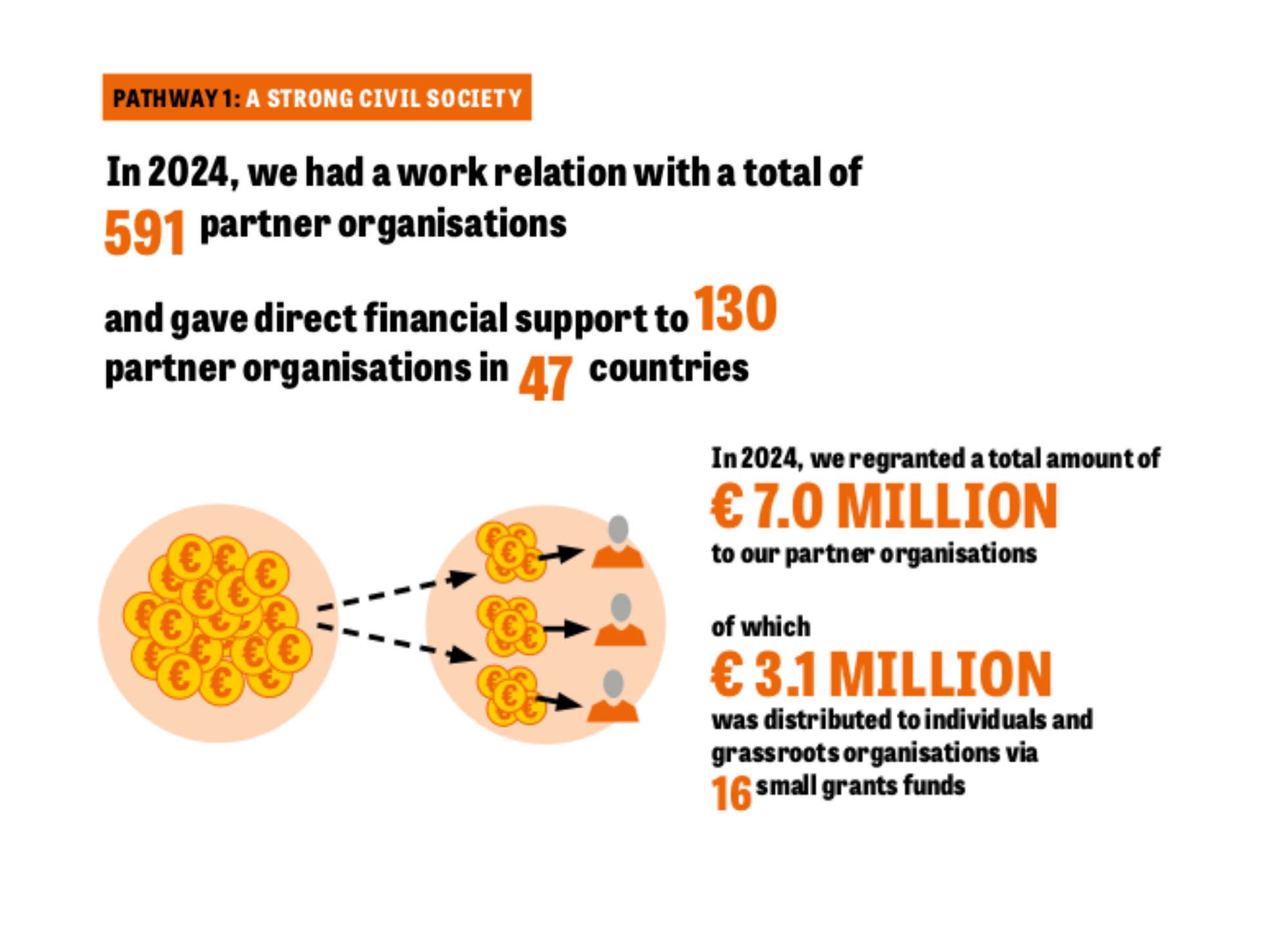
Both ENDS cooperates with many partner organisations around the world to strengthen civil society, advocate for green and fair policies and support transformative practices. This cooperation entails much more then only financial support; we strategise together and each take our own role in our joint efforts for just and sustainable societies. Our partner network embraces the whole world:

SYSTEMIC CHANGE

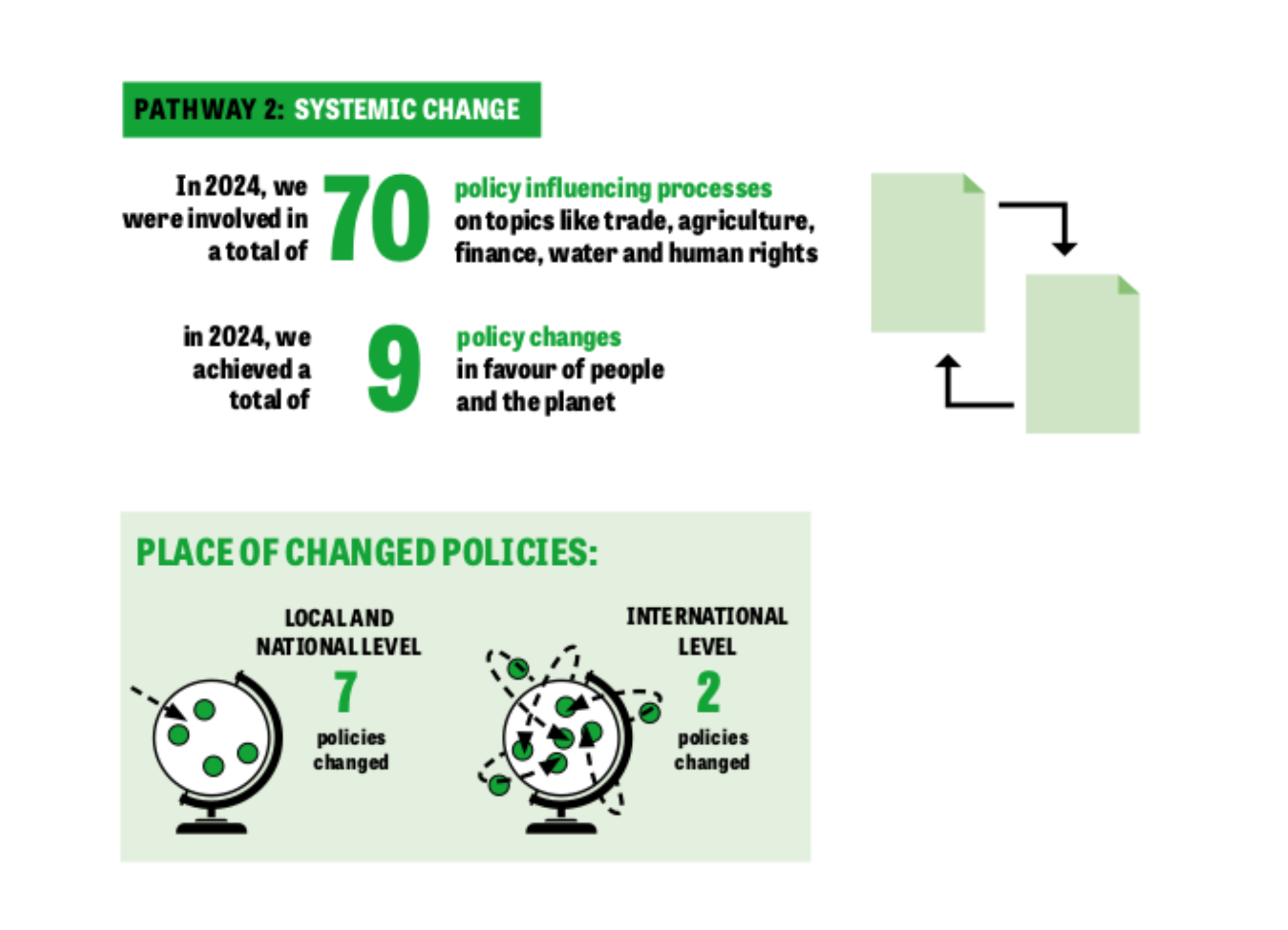
In order for systems to prioritise people and the planet, Both ENDS and partners aim to change the system step by step, policy by policy. Where policies are already strong, they need to be implemented, and where they are absent, we advocate for new ones to be enacted, on all levels. Influencing policies often is a matter of patience. It might take years until change finally materialises. This is why Both ENDS and partners are involved in such a large number of policy influencing processes:

TRANSFORMATIVE PRACTICES

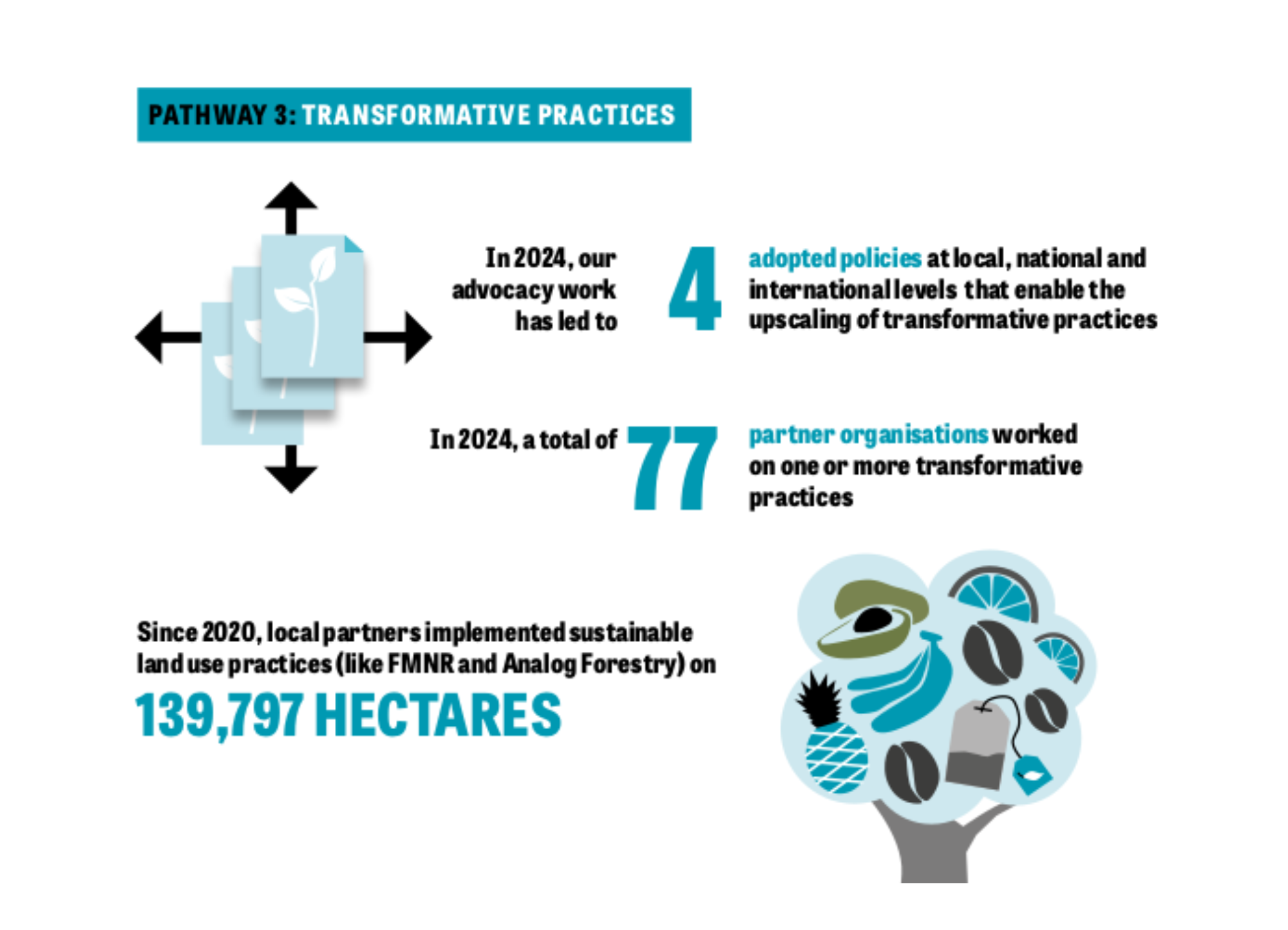
According to Both ENDS and partners, transformative practices are the future. There are many of these bottom-up, planet-friendly practices. By strengthening and eventually up-scaling transformative practices, Both ENDS and counterparts show tangible examples that can inspire and promote a radically different system that places human and environmental well-being at its core:
[click to enlarge]
[click to enlarge]
[click to enlarge]

SOME EXAMPLES OF OUR IMPACT IN 2024

STRONG CIVIL SOCIETY

  • Both ENDS is committed to supporting civil society organisations to influence decision-making and advance environmental justice, including by building strong networks. Since 2007, we have joined forces with partners from all over the world as part of the Drynet network. Drynet has proven its worth as an organising force in the processes of the United Nations Convention to Combat Desertification (UNCCD), among other forums. In 2024, Both ENDS was pleased to join other Drynet members at the UNCCD COP16.
  • With repression and insecurity increasing for many of our partners, Both ENDS felt the need to elaborate an internal process to be able to quickly and effectively assist partners in emergency situations. In 2024, we therefore developed what we call a ‘System of Care‘ to be able to do so. It has already shown it’s merit as we were able to give emergency relief – financial and otherwise – to 6 partners from 5 different countries in the same year. The emergency funds were used by partners for a variety of needs, responding to wrongful arrests, kidnapping, credible death threats and violent attacks.
  • In 2024, we concluded our Examination of Power process, in which we researched how Both ENDS holds power and how partners experience equity and power in their relationship with Both ENDS. We analysed the results and discussed the learnings with our partners and Both ENDS staff. We are happy to see that a majority of partners describe Both ENDS as an international mission-aligned advocacy partner. And we learned that we hold diverse forms of power, including the power to connect and create new opportunities for partners; to mobilise financial resources and to influence political agendas. We will built upon the learnings and also included them in our next 5 year organisational strategy.
  • An important goal of our Dare To Trust initiative was to learn how organisations, when they can decide for themselves, wish to tell their stories. Thus, in 2024 we received a wide range of creative reports from the Women Environmental Human Rights Defenders (WEHRDs) who received a grant, which we bundled together in a magazine. Interestingly, partners and WEHRDs actually enjoyed this ‘reporting’ process. Rather than forcing their work and results into a set of rigid indicators, they were able to highlight what they found to be the most important results, thus enhancing the effectiveness and value of their reporting. As a consequence, the funder and other potential audiences get a much better picture of the real story on the ground, which puts everyone in a better to position to learn from and build on these experiences.
  • Both ENDS was member of the Steering Group overseeing the review of the Complaints and Appeals Procedure (CAP) of the Roundtable on Sustainable Palm Oil (RSPO) – the global certification scheme with over 6000 members from the palm oil supply chain. The Steering Group worked closely with the RSPO Secretariat and an expert consultancy group. This resulted in a consensus revised Complaints and Appeals Procedure, ready to be submitted for public consultation. The RSPO CAP guides the handling of a large number of complaints, mostly around land and labour conflicts and ways of ensuring accountability and remedy.
  • During the CBD COP16 in Cali, Colombia, the first-ever Irene Dankelman Young Ecofeminist Awards were handed out; an initiative of Women Engage for Common Future (WECF), the Women’s Environment and Development Organization (WEDO), the International Union for Conservation of Nature Netherlands National Committee of the Netherlands (IUCN NL), and Both ENDS, with the objective to honour and amplify the transformative work that young ecofeminist leaders are doing every day in every corner of the globe to create a more gender-just and sustainable planet for all. The award is inspired by the life and work of the late Irene Dankelman, an absolute pioneer in the field of gender and environment and the founding mother of Both ENDS.

SYSTEMIC CHANGE

  • Both ENDS collaborates with partners worldwide to tackle the root causes of inequality and environmental degradation, many of which are embedded in the current global trade and investment system. Thanks to decades’ of work on the topic, more and more countries have reconsidered their Bilateral Investment Treaties and the problematic ISDS system. In 2024, the most recent termination of a BIT with the Netherlands was done by Kenya.
  • In 2023-2024 Both ENDS together with its partners in the ECA Watch Network has advocated insistingly at the EU for the EU to take a leading role in ending export credit support for oil and gas projects. To this end, among other things, in April 2024 we published a research report into European Member States’ progress in aligning their export credit agencies with the goals of the Paris Agreement. In July 2024, the European Commission publicly declared its position by publishing its proposal for ending ECA support for oil and gas at the OECD. The EU is a global leader in ending ECA support for fossil fuels. This has ended billions of euros per year in support for fossil fuels by European Member States.
  • Both ENDS provided advice and our partner GDA provided support to a number of communities in Cameroon who were negatively affected by the construction of the Nachtigal dam on the Sanaga River, funded by the World Bank and a number of other development banks. After filing a complaint to the World Bank in 2022, a mediation process started in 2024. Although in the end the village chiefs were the ones who took part in the negotiations, the process leading to the complaint and the mediation was inclusive. Thanks in particular to the efforts of GDA, the women from the communities had organised themselves to have a voice in the negotiations on compensation for the damage suffered. The project developer has partially met the need for a number of public facilities that benefit the women in the communities.
  • In Uganda, we supported our partners in their promotion of clean energy. Amongst other things, they have been advocating for the enactment of the Consumer Protection and management bill Law to protect consumers from poor-quality solar energy products. Thanks to lobby efforts we are happy to announce that this bill was among the 66 bills to be tabled before parliament for debate and enactment.
  • In 2024 Both ENDS, together with Milieudefensie, and partners from Mozambique, have continued their efforts to demonstrate the harms of the Mozambique LNG project and the Dutch public finance from Atradius DSB for this project. In the first quarter of the year, partners from Mozambique visited the Dutch Parliament as well as the Ministry of Foreign Affairs and the Ministry of Finance. In the fall, another meeting was held in the Parliament with the Commission of Finance, to shed light on alleged atrocities that have taken place at the borders of the Mozambique LNG project. Both ENDS and partners have also continued efforts to get information about the project and decision making process, by investing time and effort in Freedom of Information requests. Atradius DSB, at the end of 2024, was one of the few financiers in the Mozambique LNG project that has not yet re-confirmed support. Holding off support puts the needed pressure on the project to ensure accountability for the injustices taken place. Addtionally, pressure has built to ensure independent investigations to the alleged atrocities the magazine Politico reported on in 2024 that took place in 2021 near the project’s premises.

TRANSFORMATIVE PRACTICES

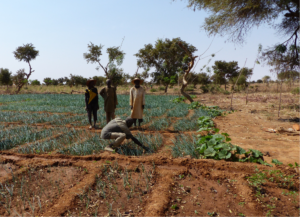
  • Since 2018, Both ENDS has cooperated with partners to support local communities in regreening the Sahel. Thanks to the programme, in hundreds of communities in Niger, Burkina Faso and Senegal more and more people are well aware that the roots of a greener future lie under the earth. More than 65,000 farmers are now practicing Farmer Managed Natural Regeneration (FMNR) to facilitate regrowth of trees and shrubs.
  • When mapping the Ondiri wetland in our Remote Sensing for Communities project with IHE Delft, it turned out the Nairobi Southern Bypass was aggravating the siltation in the wetland, which hampered the water flow into the Nyongara River (tributary of the Athi river). Local organisation Friends of Ondiri Wetland Kenya learnt about these results and immediately showed local ownership to clean up the silt, leading to a restored wetland and a healthy river flow. This example shows how a combination of data and local initiative can contribute to more inclusive and effective water governance.
  • For many years, Both ENDS and NGO Uttaran are working to enhance inclusive water governance in the delta of Bangladesh by involving local communities. Part of this work is the support for local (youth) water committees. In 2024, the Youth Water Committee of Tala Upazila took the lead in cleaning up canals and restoring the flow of water, alleviating the devastating effects of waterlogging. Their engagement gave the members of the Youth Water Committee a deeper understanding of local water governance practices and empowered them to undertake more effective advocacy and sensitization efforts with the relevant authorities, ensuring sustainable and inclusive water governance solutions for the community.
  • The Matanza-Riachuelo River, which runs through the city of Buenos Aires, is known to be one of the most polluted waterways in the world. Our partner FARN is working to restore the river basin within the Wetlands without Borders programme. They have appointed it as an important biocultural corridor with not only a natural, but also cultural value. They plant trees, strengthen the protection of the nature reserves in the area, and organise numerous educational activities. For some of the children, this is the first time they experience nature.
  • In 2024, our long-time partner International Analog Forestry Network (IAFN) expanded its efforts to empower Analog Forestry practitioners and partner CBOs globally. Amongst other things, they organised webinars on climate resilience and forest restoration, monitoring workshops, and knowledge-sharing exchanges certified. Moreover, eight new Analog Forestry trainers were certified through a virtual Training of Trainers program.
  • As part of GAGGA and beyond, Both ENDS supports and amplifies many gender-just climate solutions across the world. The successful gender-just climate solution of the Aadhimalai Producer Company – an indigenous women’s collective who produce and sell Non-Timber Forest Products from a restored forest area – was presented to the state’s Tribal Welfare Department. The senior officers appreciated the model and one expressed the aspiration to launch a Government Scheme inspired by the key principles of the Aadhimalai Producer Company. This is an important step for the promotion of forest restoration and the sustainable use of NTFPs.

Regreening the Sahel through FMNR – more than just a land use practice

When you look at a patch of dry and dusty ground in the hot, semi-arid Sahel, it may be hard to imagine that a rich ecosystem is hidden beneath your feet. Fortunately, in hundreds of communities in Niger, Burkina Faso and Senegal, more and more people are well aware that the roots of a greener future lie under the earth.

Since 2018, Both ENDS has cooperated with partners – including Centre Régional d’Enseignement Spécialisé en Agriculture (CRESA, Niger), Secrétariat Permanent des ONG (SPONG, Burking Faso), and Innovation, Environnement, Développement Afrique (IED Afrique, Senegal) – to support local communities in regreening the Sahel. Thanks to the programme, more than 65,000 farmers are now practicing Farmer Managed Natural Regeneration (FMNR) to facilitate regrowth of trees and shrubs.

LOCALLY-LED APPROACH

In the Sahel’s arid environment, where access to water is limited, FMNR provides an accessible, affordable, and, most importantly, sustainable approach to ecosystem restoration. By nurturing the region’s ‘underground forests’ of roots, stumps and seeds, farmers have successfully regreened nearly 140,000 hectares of land in the Sahel. In addition to enhancing soil fertility and water retention, farmers have increased their incomes, strengthened their resilience to climate change, and improved social cohesion in their communities.

The success of the programme – which has taken place in a context of persistent instability, conflict and violence – is due to the locally-led approach. More than 800 village committees, which include representatives of different groups within the communities, have been established to manage the continued regreening efforts. The programme facilitates training and technical support, but it is local farmers who are driving the change. In 2024 alone, nearly 15,000 farmers were trained in FMNR.

Since the beginning of the programme, nearly 90,000 farmers have learned about FMNR. Across the three countries, FMNR ‘champion’ farmers are now inspiring others in their communities to adopt FMNR by letting them see for themselves that the approach works. On regreened FMNR plots, champion farmers are training others in FMNR techniques, such as pruning and the creation of micro-basins around saplings. Since the roots of the programme are local – both literally and figuratively – the regreening continues even when villages become inaccessible to local partners due to the security situation.

AN ENABLING ENVIRONMENT

A key part of the Communities Regreen the Sahel programme is to create an enabling environment for FMNR – to promote awareness and broader support, including through policies, economic incentives and funding for Farmer Managed Natural Regeneration at all levels, from the local to the global. The village committees, which often include local leaders from both farming and pastoralist communities, serve as an important space to discuss and further promote FMNR, as well as to make agreements about land use and resolve potential conflicts, such as those between farmers and nomadic pastoralists. Both communities – whose different uses of land can lead to conflict – have much to gain from regreening, as well as from clearer arrangements around land use.

In order to create an economic incentive to accelerate the adoption and sustainability of FMNR by farmers, the Communities Regreen the Sahel programme also supports local women’s groups, union and federations in the processing and sale of FMNR foods (e.g. fruits, nuts, and leafy vegetables, as well as non-timber forest products, such as shea butter, oil and honey).

At the municipal level, meetings with policymakers have yielded success. In 2024, for example, partners in Senegal secured mayoral commitments to integrate FMNR funding into municipal development plans. Significant results were also achieved at the national level. In 2024, the government of Senegal revised its Agro-Sylvo-Pastoral Orientation Law, formally recognising FMNR as a key approach to improving productivity and resilience. Senegal’s official recognition of FMNR helps pave the way for its broader adoption across the country. (The decision follows the example of Niger, which in 2020 became one of the first countries to formally promote FMNR through a presidential decree).

Both ENDS is working with partners in the Sahel to ensure that FMNR receives the attention and support it deserves among international audiences. In 2024, we participated in key conferences, including the International Conference on Community-Based Adaptation to Climate Change, hosted by the International Institute for Environment and Development (IIED) and held in Tanzania, and the Accelerating Nature Based Solutions Conference, organised by the Global Evergreening Alliance in Zambia. At the latter event, we organised a well-attended side event on the Communities Regreen the Sahel programme, which resulted in valuable new connections with other actors in the field.

We also attended the United Nations Convention to Combat Desertification (UNCCD) COP16 in Saudi Arabia and the UN Climate Conference (UNFCCC) COP29 in Azerbaijan, where we organised and participated in various side events to showcase FMNR as an integrated solution to land degradation, food insecurity and climate change. At a Board Meeting of the Green Climate Fund (GCF) in Rwanda, we engaged with key decision-makers to advocate for increased access to GCF funding for civil society organisations and for locally-driven action on climate change. Our awareness-raising and advocacy in these global policymaking spaces in 2024 attracted the attention of key actors, including bilateral donors and government officials from Burkina Faso and Senegal, who attended the side-events.

NEW PARTNERSHIPS, NEW DIRECTIONS

Meanwhile, thanks to our proven track record and clear impact, Both ENDS, CRESA, SPONG, and IED Afrique have succeeded in attracting new sources of funding to build on the solid foundations of the Communities Regreen the Sahel programme. With technical support from Both ENDS, SPONG took the lead on a proposal with CRESA and IED Afrique aimed at strengthening land tenure security with respect to restoration efforts. The project, which takes up lessons learned from the existing programme, was awarded funding from Reversing Environmental Degradation in Africa and Asia (REDAA), a programme funded by UK International Development from the Foreign, Commonwealth and Development Office.

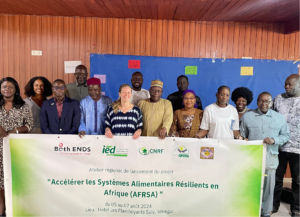
And in July, Both ENDS and the Sahel partners were thrilled to launch an exciting new three-year partnership with the Netherlands Enterprise Agency (RVO) aimed at fostering resilient food systems in the Sahel. The new programme, which capitalises on the social and environmental results of the Communities Regreen the Sahel programme, focuses on improving livelihoods and nutrition, and massively upscaling FMNR through better legislation, policies and budgets. A key aspect of the new programme is support for small-scale women food producers to establish and strengthen value chains for FMNR foods and non-timber forest products.

Thanks to the resounding success of the Communities Regreen the Sahel programme, and the widespread adoption of FMNR in Niger, Burkina Faso and Senegal, communities across the region are now poised to turn the tide on under-nourishment and ecosystem degradation. Greener pastures are already growing.


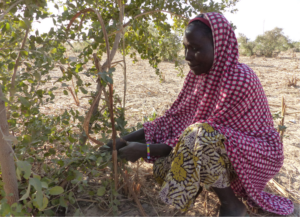
Pruning and protecting young trees is one of the technical aspects of FMNR; yet the practice contains much more

Through FMNR, farmers have increased their incomes, strengthened their resilience to climate change, and improved social cohesion in their communities

In July, Both ENDS and the Sahel partners were thrilled to launch an exciting new three-year partnership with the Netherlands Enterprise Agency (RVO) aimed at fostering resilient food systems


A market in Uganda. Photo by NeilsPhotography on Flickr

Toward a global investment system centred on people and planet

Both ENDS collaborates with partners worldwide to tackle the root causes of inequality and environmental degradation, many of which are embedded in the current global trade and investment system. Bilateral investment treaties (BIT) and other international investment agreements, such as the Energy Charter Treaty (ECT), often give corporations the right to sue governments for policies, such as measures to reduce carbon emissions or limit use of toxic chemicals, that may affect their (potential) profitmaking. Through Investor-State Dispute Settlement (ISDS), as the system is known, corporations can bring their cases to an extrajudicial tribunal whose decisions can oblige a government to pay hundreds of millions of dollars in taxpayer money to investors. The mere threat of an ISDS case can create a chilling effect on sound policymaking in favour of the interests of people, human rights, the environment and the climate.

Together with partners, Both ENDS has helped increase knowledge and awareness about the harm of ISDS in bilateral investment treaties. Thanks to decades’ of work on the topic, more and more countries have reconsidered such treaties and the ISDS system, and are pursuing a path toward more equitable and sustainable investment partnerships. In the last decade, South Africa, Indonesia, India, Ecuador, Burkina Faso, and Tanzania have all taken steps to renegotiate their investment treaties, including by terminating their BITs with the Netherlands.

In these processes, civil society organisations in the named countries and Both ENDS joined hands. We exchanged information and technical knowledge and engaged in joint strategizing. Both ENDS used its expertise, amongst other things, to create a map with key information about the status of all Dutch BITs that contain ISDS.

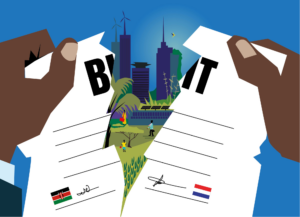
The most recent termination of a BIT with the Netherlands was done by Kenya, after an extensive review of its international investment agreements with the aim of ensuring better alignment with development objectives and sovereignty concerns. The decision marked a huge victory for civil society organisations in Kenya, who campaigned for a new investment paradigm that contributes to sustainable development and benefits Kenyan society, particularly women and young people. Through their #TerminateKenyaDutchBIT campaign, partner organisations in Kenya effectively raised public awareness and focused policymakers’ attention on the need to terminate the treaty. Also in this case, Both ENDS shared its expertise at the request of our partners.

THE ENTEBBE DECLARATION: A NEW VISION ON GLOBAL INVESTMENT

The termination of the Kenya-Netherlands BIT marked an important step in the right direction – an opportunity for both countries to better align their investment policies with social justice and sustainability principles. Following Kenya’s decision, the Dutch Ministry of Foreign Affairs invited Both ENDS and partners to share perspectives on how future BITs could be structured. These discussions inspired the idea for a broader convening of civil society organisations, academics and former policymakers to discuss the key features of a new, improved system of governance for global investment.

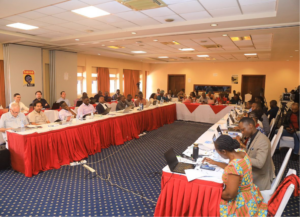
Hosted by the Southern and Eastern Africa Trade Information and Negotiations Institute (SEATINI), a longstanding partner of Both ENDS, and co-organised by Both ENDS, and FGG Alliance allies SOMO and the Transnational Institute, over 50 participants from 20 countries gathered in Entebbe, Uganda in November to rewrite the rules of the global investment regime. The Civil Society Forum on ‘Aligning Investment Policy Frameworks to Climate and Sustainable Development Goals’ resulted in the groundbreaking Entebbe Declaration, a unified call from participating civil society organisations for transformation of the investment system.

The declaration, which gives a voice to those who are normally excluded from policymaking on global investment, offers a clear and actionable roadmap for change. The declaration calls for the replacement of ISDS with mechanisms that respect state sovereignty and prioritise the welfare of people and the planet over corporate profits. It insists that investment frameworks must actively support climate goals by promoting renewable energy, ending fossil fuel subsidies, and financing green transitions. The declaration also emphasises the importance of community-led development, technology transfer, and investments that create local value. Crucially, the declaration also demands binding corporate accountability for human rights and environmental protection. With the Entebbe Declaration in hand, Both ENDS and partners are bringing these points to policymakers around the world, including in the Netherlands, the EU and at key international forums of the Organisation for Economic Co-operation and Development, UN trade commissions (UNCTAD and UNCITRAL) and the World Trade Organization.

ISDS IN THE ENERGY CHARTER TREATY: PROGRESS AND CHALLENGES AHEAD

As the Entebbe Declaration makes clear, the world urgently needs an investment governance system that facilitates a green and just energy transition, which means putting a nail in the coffin of the Energy Charter Treaty, the international investment agreement under which the most ISDS cases are filed. We celebrated an important victory in the fight to end ISDS in June, when the EU, with nearly unanimous support of the European Parliament, officially withdrew from the ECT. The EU decision followed years of successful campaigning in Europe and was prompted by decisions of several EU member states, including the Netherlands in 2022, to withdraw. For years, Both ENDS, together with our allies in the Fair, Green and Global Alliance, has co-authored reports, and provided technical support to allies and partners, particularly to prevent expansion of ECT and its ISDS clause to new countries in the Global South. In its decision, the EU echoed our key concerns about the ECT’s incompatibility with climate and sustainable development goals.

Unfortunately, the EU withdrawal only goes into effect in 2025. Just months after the EU’s official decision, ExxonMobil announced an ISDS lawsuit against the Netherlands for the closing of gas fields in Groningen, where communities have been severely damaged by earthquakes due to gas extraction. If ExxonMobil succeeds, billions of Dutch taxpayer dollars would flow into its pockets, adding to the billions in profits they’ve made from exploiting Groningen’s natural resources. Going forward, Both ENDS, together with partners and allies in the Handel Anders coalition, aims to raise awareness about the lawsuit and draw the links to similar struggles in the Global South and the urgent need for change.


In 2024, the Bilateral Investment Treaty between Kenya and the Netherlands stopped

Over 50 participants from 20 countries gathered in Entebbe, Uganda in November to rewrite the rules of the global investment regime

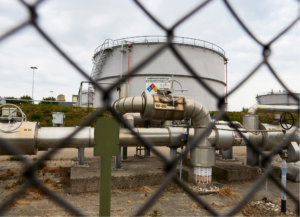
Gas drilling in Groningen. ExxonMobil announced an ISDS lawsuit against the Netherlands for the closing of these gas fields. Photo by 350.org


Collective action to combat land degradation, desertification and drought

Drynet at the UNCCD Conference

Every year, the planet loses some 100 million hectares of healthy, productive land. Land degradation, desertification and drought are affecting the lives of hundreds of millions of people, exacerbating hunger and poverty worldwide. The impacts often fall hardest on those most likely to be excluded from decision-making, including women, youth, small-scale farmers, pastoralists and Indigenous Peoples.

It’s problems like these that make a strong civil society indispensable. Civil society organisations (CSOs) see the impacts of such problems first-hand. They work directly with affected communities to develop and implement locally-led solutions. Their insights and recommendations are crucial for the development of effective policies at all levels, from the local to the global.

DRYNET: AMPLIFYING VOICES FROM DRYLANDS

Both ENDS is committed to supporting civil society organisations to influence decision-making and advance environmental justice, including by building strong networks. Since 2007, we have joined forces with partners from all over the world as part of the Drynet network. Drynet insists that to effectively counter land degradation, local organisations and communities living in drylands must be at the heart of the solution. By directly linking local groups with policy makers and engaging them in broader debates, Drynet aims to ensure that their voices are heard in important decision-making processes.

Drynet has proven its worth as an organising force in the processes of the United Nations Convention to Combat Desertification (UNCCD), among other forums. The UNCCD is an important international policymaking space, as its decisions help shape national policies on land use. It is also an important space for civil society organisations to develop relationships and credibility among national policymakers. CSOs are often taken more seriously in their own national contexts, and invited to contribute to the development and implementation of national polices, as a result of their participation in collective advocacy at UNCCD meetings.

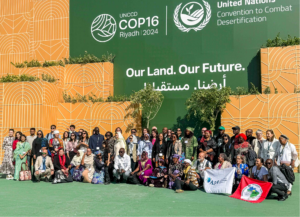
In 2024, Both ENDS was pleased to join other Drynet members at the UNCCD COP16, in Riyadh, Saudi Arabia. Together, we presented ten detailed recommendations to UNCCD decision-makers. Among other things, we called for robust implementation of the UNCCD’s landmark decision recognising informal, collective and customary land tenure; increased support for people-centred drought management strategies; and targeted policies and programmes for sustainable and inclusive rangeland management.

WOMEN-LED INITIATIVES AND WOMEN’S LAND RIGHTS ESSENTIAL

Women’s efforts to restore and care for land are essential for achieving Land Degradation Neutrality (LDN), a key goal of the UNCCD. Strengthening land rights – particularly women’s land rights – and support for women-led action on land degradation is a top priority for Both ENDS. We are active in the UNCCD Gender Caucus, where we contribute to key publications and strategies, and support activities aimed at raising the profile of gender-responsive land management and women’s rights to land. We also participate in the Women’s Land Rights Initiative, organised by TMG Think Tank for Sustainability and Robert Bosch Stiftung, which aims to strengthen women’s land rights not only in the UNCCD, but also in the UN Conventions on Biodiversity (UNCBD) and climate change (UNFCCC).

At COP16, we co-organised a side event, together with the Robert Bosch Stiftung and Landesa, focused on unlocking finance for women-led initiatives. Moderated by Both ENDS, the session underscored the need to make finance more accessible for women’s organisations. The session triggered valuable discussion and insights about how ‘impact’ is defined and measured, and the implications for funding of women-led initiatives.

ENHANCING THE ROLE OF CIVIL SOCIETY IN ENDING LAND DEGRADATION

Together with our colleagues in Drynet, Both ENDS has worked for decades to develop CSO capacity to influence policy and secure funding for locally-led initiatives for sustainable land use and restoration. In all of our work, Both ENDS highlights the value and effectiveness of local leadership and knowledge. During the COP16 panel discussion, ‘Can Science Better Inform and Shape Solutions?’, organised as part of the UNCCD Science Policy Interface, we emphasised the need for co-creation of knowledge through collaboration between scientists and local groups, including women, youth, farmers, pastoralists and Indigenous communities. Another session, co-organised with TMG Think Tank for Sustainability, focused on enhancing civil society participation in the UNCCD. Together with some 30 participants, we discussed mechanisms to enhance dialogue and joint strategising among CSOs engaged in the UNCCD, as well as opportunities to foster engagement between local civil society and national policymakers on desertification and land degradation issues.

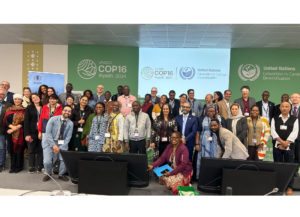
With a large contingent of the Drynet network in attendance, COP16 also provided the perfect moment to embark on a new journey together. We were thrilled to launch an exciting new three-year project, ‘Strengthening Civil Society Role in Achieving Land Degradation Neutrality’. Supported by the Global Environment Facility (GEF), the new project is a collaboration between Both ENDS, Drynet, and the International Union for Conservation of Nature (IUCN) to develop civil society organisations’ knowledge and capacities on the UNCCD and LDN, support their participation in key UNCCD international events, improve their access to funding for LDN, and strengthen communications and outreach, including by sharing stories of successful locally-led initiatives and actions for LDN.

The new project – as well as the outcomes of COP16 – confirm the power and promise of the Drynet network. Thanks to our collective efforts, civil society voices, especially those of organisations working directly with local groups who are directly impacted by land degradation, desertification and drought, are being heard at the highest levels of global policymaking. In response to our call, policymakers are increasing investment in land restoration initiatives and recognising agroecology as a viable, sustainable land management approach, an important step in the right direction.


All CSO representatives at UNCCD COP16. Photo by IISD

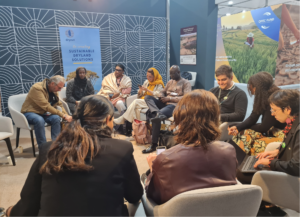
Drynet members strategizing together during the UNCCD COP 16. Photo by CARI

Celebrating the launch of our new three-year project, ‘Strengthening Civil Society Role in Achieving Land Degradation Neutrality’, supported by the Global Environment Facility (GEF). Photo by IUCN


Introduction

A word from our Executive Director and Supervisory Board Chair

Civil society organisations are the eyes, the ears and the conscience of societies. They are the foundation of a healthy democracy. They address the needs of their communities. They develop and propose innovative solutions. They speak out against societal problems, and hold governments and companies to account. And everywhere around the world, from the Philippines to Nicaragua, from the United States to the Netherlands, civil society – as such – is under pressure.

Both ENDS and partner organisations worldwide faced an extremely challenging context in 2024. Authoritarianism is on the rise. Governments are reneging on their commitments to multilateralism. Here in the Netherlands, under the short-sighted claim of pursuing ‘our own interest’, the Dutch government announced massive cuts in funding for international cooperation, abandoning its long-term role as a world champion of civil society as the cornerstone of democracy and rule of law. More than ever before, in 2024 we found ourselves fighting to preserve hard-won progress on urgent issues like action on climate change, deforestation, corporate accountability and gender equality.

The difficult context underscores the importance of our core strategy: to connect people and voices, across the Netherlands and the world. Together, our voices are stronger. We have learned from partners operating in contexts of decreased civic space. Together we are committed more than ever to bring voices and forces together to hold the line, speak out for justice and solidarity and amplify locally-led solutions. For instance, in response to plans for drastic cuts in international development cooperation, Both ENDS and our allies mobilised partners to send a personal postcard to Dutch decision-makers. The postcards increased awareness on the crucial work of partner organisations worldwide, and the importance of maintaining the Dutch government’s decades-long commitment to development cooperation.

SOLIDARITY AND SPACE FOR CARE CONTRIBUTE TO PERSEVERANCE

In the last few years, we have learned a lot from partners, including about their strategies for sustaining what are often very difficult, long-term struggles for environmental and social justice. Many communities are defending their human rights and fighting to protect ecosystems that are threatened by massive infrastructure or fossil fuel projects. They’re often up against very powerful actors, including international financial institutions, multinational corporations and authoritarian regimes.

Partners have told us time and again that international solidarity support and holding our own (public) institutions to account is a vital strategy for ensuring they can persevere in these profoundly unfair fights. In March, partners from Mozambique, Indonesia and the Philippines joined us in the Hague to meet with Dutch policymakers, including members of Parliament, to discuss human rights violations and environmental destruction in international dredging projects, especially those insured by the Dutch state through its Export Credit Agency (ECA), Atradius DSB. During their visit, we launched Dredging destruction, a new report co-authored by Both ENDS with six partners. The report demonstrates how Atradius DSB has repeatedly failed to prevent and mitigate the adverse impacts of the Dutch dredging sector, and underscores the urgent need to align Dutch policy with international obligations on responsible business conduct, and the protection and promotion of human rights, biodiversity and sustainable development. For instance in Mozambique, where Atradius DSB supports dredging activities in the Cabo Delgado LNG project, and where forced displacement of hundreds of families took place, marine and coastal ecosystems were severely impacted, and where gas explorations fuelled a violent conflict. While we’re still miles from where we need to be, our collective efforts have made an impact. In 2024, we managed to increase public and government scrutiny of Atradius DSB’s policies. It was a good sign that Atradius DSB was one of the few financiers in the Mozambican LNG project to hold off a reconfirmation of their support. A small, but important step.

We have also learned from partners about the importance of creating space and time for healing and care. In the face of difficult struggles, restorative activities that foster collective and individual well-being are crucial. In Brazil, women environmental human rights defenders have been fighting for more than a decade to protect their communities and territory from destructive dredging around the Port of Suape. With support from Both ENDS, the women – many of whom have lost their fishing grounds and livelihoods – have set up community kitchens. The kitchens provide a safe space for the women to share their personal struggles, support each other, and engage in collective care activities, including meetings to exchange experiences, leisure activities and cultural exchange.

Like the women in Brazil, many partners are at the same time resisting harm and fostering healing. Even in the most difficult of circumstances, they are restoring themselves and the fragile ecosystems on which they depend. In the Sahel, against a backdrop of climate change, violence and instability, communities are achieving remarkable results by nurturing regeneration of native flora. They are playing a role that civil society organisations are uniquely suited to perform: effectively demonstrating that another future is possible and showing how we can get there. We are delighted that the ‘Communities Regreen the Sahel’ programme attracted new support in 2024. Together with partners, we are excited to build on the groundwork laid and pursue new work aimed at fostering resilient food systems.

A ROBUST AND EFFECTIVE ORGANISATION

The year 2024 marked a successful transition to a new governance system and new leadership of Both ENDS. To better reflect our actual practice, we formally transitioned to a Supervisory Board structure. Moreover, not only did we take up our new roles as Chair of the Supervisory Board (Leida) and Executive Director (Karin), many Both ENDS colleagues assumed new leadership roles as well. As part of our self-organised structure, every few years staff members have the opportunity to take up leadership of a team. The approach mirrors Both ENDS’s vision of the world, putting our commitment to ‘sharing power’ into practice across the organisation. Our aim is to stimulate ownership and personal growth, and ensure that decision-making power is not confined to a limited number of individuals, but rather shared across the organisation. We are convinced that Both ENDS is a more robust and effective organisation as a result.

Building trust and strong relationships. Listening and learning together. Collaborating in relationships of equality. This is our recipe for success, in our work with partners, as well as allies and colleagues. It is also the recipe we used to develop a new five-year strategy, a highly participatory and lively process. First, we gathered input from partners, staff and diverse experts in the field, who shared their perspectives about the current and future context. Then in March, we were delighted to convene a diverse group of partner representatives from around the globe for an intense three-day strategy meeting at the Both ENDS office in Utrecht. In session after session, Both ENDS staff went into listening-mode, gathering the insights and input of partners on a whole range of strategic questions.

TRUST AND HOPE

What we heard during the partner meeting confirmed the importance of the core of our work: to act in solidarity with partners, and support their efforts and struggles for environmental justice. In response to the needs of partners and the increasingly difficult context we face, the new strategy builds on what we are already doing, while sharpening our focus and deepening our approach. Going forward, we aim to ensure that the global environmental justice movement is strong and connected; that environmentally-just practices and processes are widely recognised and more common; and that environmental injustice is countered, and harm is addressed and healed.

In the strategy meeting, we also heard from partners that the way we support them is crucial. Partners affirmed the value of Both ENDS’s commitment to relationships based on integrity, equality and trust, where we recognise each other’s expertise, actively learn together and cooperate toward shared goals. In our new strategy, ‘Examination of Power’ will be a continual process to ensure that we stay attentive to our power and use it well.

On the final evening of the March strategy meeting, we threw open the office doors and celebrated our collective work with a festive, full room of partners and special guests. Despite the many challenges ahead, despite increasing repression and injustice everywhere around the world, we aim to preserve the hopeful mood of that wonderful evening. We are strongly committed to and confident about our strategy to strengthen civil society as the driving force to address the current crises and guide environmental justice. We are succeeding in garnering the support of new donors, including philanthropic foundations (Fondation Chanel and re:arc institute) and bilateral donors (the Dutch Enterprise Agency, UK FCDO and Irish Aid). As we write this, we already see the counterpower growing. From Kenya to Canada, Argentina to the Netherlands, people are taking to the streets to safeguard democracy, demand environmental and social justice, and insist on evidence-based policymaking. We have an uphill battle ahead. But arm in arm with partners and allies worldwide, we are ready for the journey.


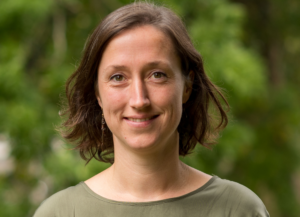
Karin van Boxtel, Executive Director

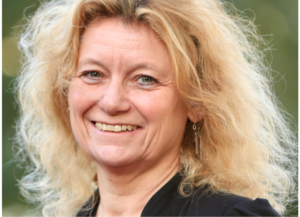
Leida Rijnhout, Chair of the Supervisory Board


Karin van Boxtel, Executive Director

Leida Rijnhout, Chair of the Supervisory Board